A Rainy-Day Walk for Noticing Public Displays
A rainy-day walk for noticing public displays helps you compare how shelter, reflections, and wet streets change what screens reveal from different viewpoints.
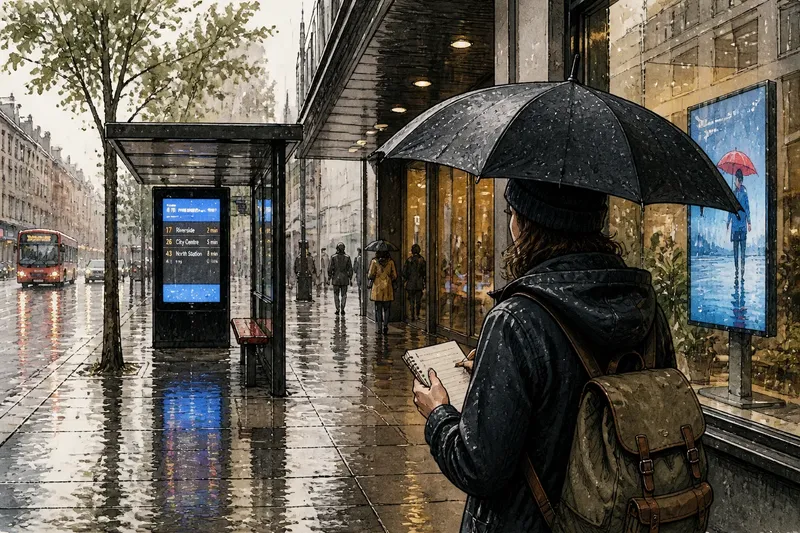
A rainy-day walk for noticing public displays can show how a screen changes as you move between open pavement, an awning, and a sheltered entrance. Choose a familiar route with a few visible displays, bring a small notebook or use your phone for notes, and let the weather set the pace rather than turning the walk into a hunt for technical answers.
Choose a route with changing cover
Pick a short, familiar stretch where you can see several public displays from the sidewalk: a transit screen, a shop window, a lobby display visible through glass, or a digital panel beneath a canopy. The point is not to collect the largest number. A route that shifts between exposed and covered places makes it easier to notice what rain changes.
Before setting out, check that the route has a safe, public place to pause without blocking doorways, curb ramps, or foot traffic. A notebook and pencil are useful in drizzle; a phone can be convenient, but keep it put away while walking and avoid photographing people or private interiors. You can record observations in words without capturing an image.
Pick a route you can reverse or shorten if the rain becomes uncomfortable. This is a noticing walk, not a reason to linger outdoors in poor conditions.
Start with a view from the open sidewalk
At the first display, stop where you can stand without obstructing anyone. Note the weather in plain terms: steady drizzle, fresh rain on the pavement, or a pause between showers. Then describe what you can actually see, such as whether the message is readable, whether the screen seems bright against its surroundings, and whether moving water or glare interrupts the view.
Keep the description observational. “The white lettering disappears against a bright patch” says more than “the screen is bad.” A display can be clear from one angle and difficult from another, so include your position: across the street, beside a bus shelter, or near a shop window.
Give the scene a quiet moment before moving on. A passing vehicle may send a sheen of water across the road or briefly cast reflections over the display. You do not need to interpret every change; simply note whether it lasts or passes.
Compare the same display from shelter
If a public awning, transit shelter, or recessed doorway offers a lawful, unobstructed place to stand, look again from there. Do not enter a private building or lean into a doorway just to improve your view. Compare the sheltered angle with your first position: has the screen become easier to read, or does glass now add another layer of reflection?
Rain can make shelter feel like a simple advantage, but the surfaces around it complicate the view. A glass panel may reflect signs behind you; a dark canopy may frame a bright screen; a shallow roof may leave the display exposed to windblown rain. Think of the view like a mirror set at an angle: a small shift in where you stand can move a reflection into or out of the message.
Imagine you are watching a transit display from the open curb, where a bright reflection crosses its lower line. You step beneath the shelter and find the reflection has shifted, but a glass side panel now catches the shop lights behind you. In your notes, record both positions and the specific change; that gives you a useful comparison without treating either view as the only correct one.
Follow reflections across wet surfaces
As you continue, notice the surfaces between you and each display. Wet pavement may mirror a bright panel in a broken, shimmering patch. Shop windows can combine the screen with traffic, pedestrians, and interior lighting, while a puddle may catch only a fragment of an image.
Ask where the reflection appears and what it does to the message. Does it create a second, blurred version below the original? Does it wash out a dark background? Does it vanish when a vehicle passes? These details help distinguish a reflection from a screen effect or a change in displayed content.
Keep your attention on public views rather than approaching a roadway or stepping around barriers for a better angle. If the only way to see a reflection clearly would put you in someone’s way or near moving traffic, leave it out. A partial observation is still a useful one.
Notice how the message reads as you move
Walk a little farther along the sidewalk and see whether the display remains legible from ordinary passing positions. You are not looking for a perfect viewing spot. Notice whether the message comes into view early enough to understand, whether shelter posts or tree branches interrupt it, and whether glare changes as your angle shifts.
Pay attention to the difference between seeing a screen and reading it. A bright rectangle may remain obvious through rain while small text loses contrast in reflections. A short headline may stay understandable where a detailed panel becomes hard to follow. Write down what you could read without stopping, then what became clear only when you paused.
Do not stare at a display while crossing or walking through a busy area. Stop in a safe place, look, and put your notes away before moving again. A public display is part of a shared street; the observation should fit the same ordinary care you would use on any walk.
What should you record on the walk?
Should I take photographs of the displays?
Notes are often enough, especially when the aim is to compare visibility rather than document a particular image. If you do take a photo, follow local rules, avoid including identifiable passersby, and do not step into a risky spot for a clearer frame.
What if the screen changes while I am watching?
Record the change as part of the scene: for example, “the bright panel switched to a dark image while rain continued.” You do not need to decide whether the timing was intentional or caused by a setting.
How can I compare two displays fairly?
Use the same simple observations at each stop: your position, the nearby cover, the visible reflections, and what you could read. The displays may differ in size or content, so the notes describe your experience of each view rather than ranking them as if they were identical.
What if the weather turns unpleasant?
End the walk or move indoors to a place where you are welcome. You can resume another day; comfort and safe footing matter more than completing the route.
Finish by comparing the notes, not the screens
At the end of the route, scan your notes for changes tied to position and weather. You might see that reflections appeared mainly across wet pavement, while shelter reduced direct rain but introduced window glare. Keep those observations separate from assumptions about brightness, equipment, or the display owner’s intentions.
A rainy-day walk for noticing public displays is most useful when it leaves you with a small set of specific comparisons: open sidewalk versus shelter, screen versus reflection, and seeing versus reading. If you repeat the route in different weather, keep the same stopping points and note what changed in the conditions. That gives you a clearer sense of how the public view shifts without needing special equipment or a formal survey.